You know, when I first started exploring the hidden gems of Southeast Asia, my mind was often on the breathtaking temples, the serene rivers, and the delicious street food.
But what truly captured my imagination in Laos, and what I believe will captivate yours, is something far more authentic and deeply rooted in everyday life: the incredible world of traditional Laotian games.
I’ve always felt that to truly understand a culture, you need to see how its people play, and Laos offers such a vibrant, heartwarming example. From lively group activities that fill village squares with laughter to intricate pastimes honed over centuries, these aren’t just games; they’re living stories, passed down through generations.
They offer such a unique window into the spirit, ingenuity, and community values of the Lao people, far beyond anything you’d read in a travel guide. In a rapidly digitizing world, discovering and appreciating these timeless traditions feels like unearthing a true cultural treasure.
I’m convinced you’ll be just as fascinated by their charm and the sheer joy they bring as I was. Ready to step off the beaten path and explore these living traditions with me?
Let’s dive deep into the fascinating world of Laos’ traditional games and uncover their magic, right here, right now.
More Than Just Play: The Soul of Laotian Community
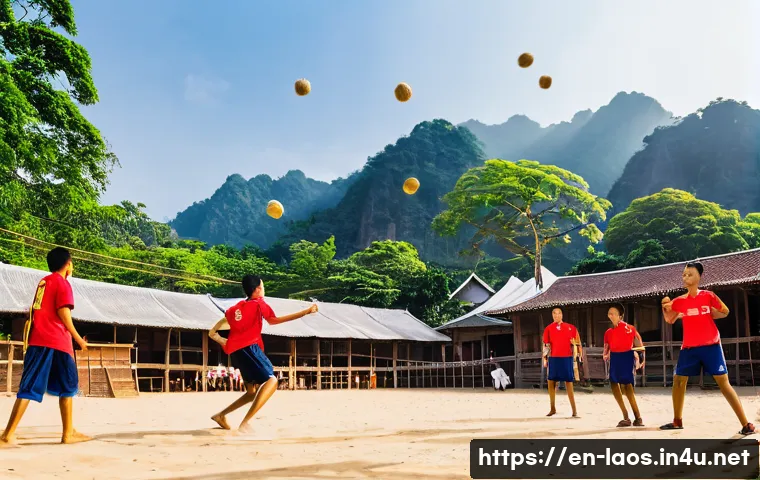
You know, when I first stumbled upon a group of kids in a dusty village square in Laos, passionately engaged in what looked like a blend of volleyball and soccer, my immediate thought wasn’t about the rules, but the sheer, unadulterated joy on their faces. It wasn’t just a game; it was a vibrant tapestry of community, laughter, and connection. This really hit me – these traditional pastimes are so much more than mere entertainment here. They’re living, breathing expressions of culture, bringing people together across generations in a way that feels incredibly genuine and heartwarming. It’s a stark contrast to our often screen-dominated lives, and frankly, it made me yearn for that kind of simple, tangible interaction. Seeing grandfathers coaching their grandsons with gentle nudges and women cheering on their neighbors with infectious enthusiasm made me realize the profound role these games play in strengthening social bonds and preserving a sense of collective identity. It’s a beautiful reminder that true connection often happens when we’re simply playing together, sharing a moment of lighthearted competition and camaraderie. I truly believe that anyone who experiences it will feel the same sense of wonder.
The Rhythm of Life: Games as Cultural Storytellers
Each traditional Laotian game, I’ve discovered, carries with it a piece of history, a whisper of ancient tales, or a lesson about life itself. They’re not just physical activities; they’re cultural touchstones. Think about it – a game passed down through oral tradition for centuries isn’t just about winning or losing; it’s about the values it instills, the stories it keeps alive, and the shared heritage it reinforces. When I watched the intricate dance of Mak Khom, a form of Laotian chess, I could almost feel the weight of generations of strategic thinking behind each move. It felt like I was witnessing a living artifact, a dynamic piece of their past unfolding before my eyes. This deep-rooted connection to their heritage through play is something truly special and, for me, was an eye-opening experience into how cultures thrive.
Bridging Generations Through Shared Laughter
One of the most beautiful aspects I observed was how these games effortlessly bridge the generation gap. It’s not uncommon to see young children learning the ropes from their grandparents, who are still remarkably agile and competitive! This intergenerational play creates such a rich environment for knowledge transfer, respect, and enduring family bonds. I remember one afternoon, trying my hand at a simple tag game with some local children, and an elderly woman, with eyes twinkling, joined in, showing us all a few clever dodges. It wasn’t just fun; it was a tangible demonstration of how play unites everyone, regardless of age, creating a seamless flow of tradition and joy that is truly heartwarming to witness. This kind of shared experience fosters a sense of belonging and continuity that’s incredibly powerful.
Mastering the Moves: Games of Skill and Precision
Stepping beyond the simple joy, many Laotian traditional games demand an impressive level of skill, strategy, and precision that would honestly put some modern esports to shame! When I watched masters of games like Mak Pong, a complex board game, I was genuinely captivated by the mental gymnastics involved. It wasn’t just about moving pieces; it was about anticipating several steps ahead, understanding subtle psychological cues from your opponent, and executing a flawless plan. It really made me appreciate the depth of thought and practice these individuals put into their craft, transforming what looks like a simple pastime into a profound intellectual challenge. My own attempts, to be honest, were often clumsy and short-lived, but the sheer concentration and grace of the skilled players were a sight to behold, proving that these aren’t just children’s games but serious competitions that demand respect and dedication.
The Art of the Toss: Petanque’s Enduring Appeal
You might be surprised to learn that Petanque, a game often associated with France, has a massive following in Laos, and they play it with an incredible flair! The objective is simple: throw your metallic balls as close as possible to a small wooden target ball called a cochonnet. But oh, the strategy involved! Players crouch, measure the ground, and release their boules with a precise flick of the wrist, aiming to nudge opponents’ balls away or perfectly nestle their own. I spent an entire afternoon trying to master the art of the perfect throw, and let me tell you, it’s far harder than it looks. The concentration, the subtle shifts in body weight, and the precise aim required make it a truly engaging game of skill, and the lively banter among players adds to its unique charm. It’s a wonderful example of how a game can transcend its origins and become deeply embedded in another culture’s recreational life.
Acrobatic Feats: The Dance of Sepak Takraw
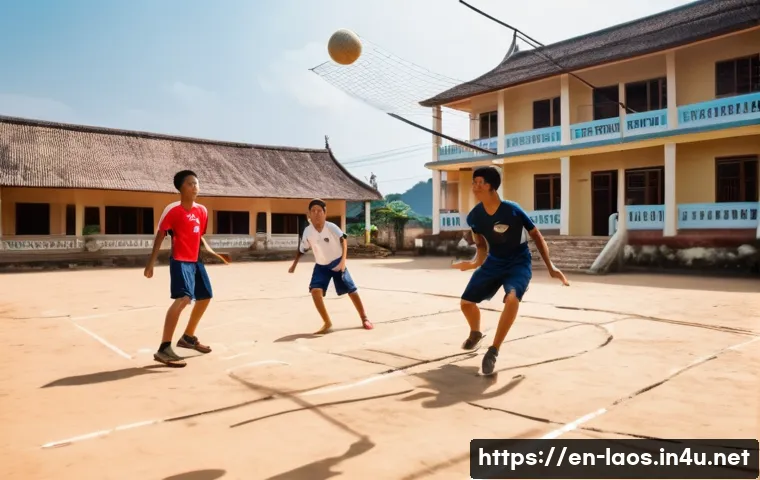
If there’s one game that consistently blows my mind in Laos, it’s Sepak Takraw, often dubbed ‘kick volleyball’. Imagine a rattan ball flying over a net, but instead of using hands, players use their feet, knees, chest, and head to keep it in play. The agility, flexibility, and sheer acrobatic skill required are absolutely breathtaking. I’ve watched players perform gravity-defying bicycle kicks and intricate headers that seem to defy physics. When I tried to even lightly kick the ball without falling over, I quickly realized the immense talent involved! It’s not just about strength; it’s about incredible body control, lightning-fast reflexes, and a deep understanding of physics. The rhythm and flow of the game, combined with the players’ almost balletic movements, make it a truly mesmerizing spectacle, a testament to human athletic potential that has been refined over generations.
Laughter in the Air: Group Games That Unite Everyone
There’s something truly infectious about a group of people, young and old, coming together purely for the joy of play, and Laotian traditional games excel at fostering this kind of communal fun. Unlike many solitary digital pastimes, these games are inherently social, encouraging interaction, communication, and a healthy dose of friendly competition. I vividly recall watching a game of ‘tug-of-war’ with a distinct Laotian twist, where entire villages seemed to participate, the air filled with shouts and cheers that echoed through the fields. It wasn’t just about physical strength; it was about collective effort and the shared experience of striving together towards a common, albeit playful, goal. These moments create such strong bonds and memories, reminding everyone involved that they are part of something bigger, a vibrant, supportive community. The sheer volume of laughter and the genuine smiles are a testament to the power of shared play to uplift spirits and forge lasting connections.
Rattling the Rattan: Catching the Bamboo Stick
One of the simpler, yet incredibly engaging, group activities I encountered involves a bamboo stick and quick reflexes. Imagine a large group forming a circle, and one person in the center tries to catch a stick that is quickly passed around. The speed at which they pass and the cunning tricks to evade the ‘catcher’ make for uproarious laughter and plenty of unexpected twists. It’s a fantastic icebreaker, and I saw people who barely knew each other quickly dissolve into fits of giggles as they tried to outsmart the person in the middle. This game is wonderful because it requires minimal equipment, can be played almost anywhere, and instantly creates a lively, interactive atmosphere. It’s a beautiful demonstration of how simple elements can combine to create profound joy and connection amongst a group of strangers, quickly turning them into playmates.
The Art of Teamwork: Bamboo Dance
Perhaps one of the most visually stunning group activities is the bamboo dance, or Lam Vong. While primarily a dance, its origins and execution share many characteristics with traditional games, demanding timing, rhythm, and immense teamwork. Two long bamboo poles are placed on the ground and clapped together in a rhythmic pattern while dancers step in and out of the poles. It looks graceful and effortless when performed by experienced dancers, but the challenge comes when you try it yourself! I nearly got my feet caught more times than I care to admit, but the encouragement from the group and the shared laughter made the learning process incredibly fun. It’s a beautiful blend of physical coordination and cultural expression, where every participant contributes to the collective harmony, and the success of the group depends on individual precision working in concert.
Timeless Treasures: Passed Down Through Generations
It’s truly remarkable how resilient these traditional Laotian games are, especially in a world increasingly dominated by digital distractions. They’re not just fleeting trends; they are timeless treasures, carefully nurtured and passed down from one generation to the next, often through informal learning in homes, villages, and community gatherings. This organic transmission, rather than formal instruction, imbues them with a unique authenticity and warmth. I often think about the grandmothers and grandfathers patiently teaching their grandchildren the nuanced strategies of a board game or the precise footwork of a bamboo dance, seeing the spark of understanding and joy in the young eyes. It’s a powerful act of cultural preservation, ensuring that these rich traditions don’t fade into history but continue to thrive and evolve with each new cohort of players. This continuous thread of shared heritage is, for me, one of the most compelling aspects of Laotian play, offering a deep sense of continuity and belonging.
The Unwritten Rulebook: Oral Traditions of Play
What truly fascinates me about many of these traditional games is that they rarely come with a written instruction manual. Instead, the rules, strategies, and even the etiquette of play are passed down orally, through observation and direct participation. This method of learning fosters a deeper connection to the game itself, as it requires active engagement, listening, and mimicry, rather than simply reading a set of instructions. When I asked about the rules for a particular game, I was often met with demonstrations and stories, rather than a concise list. This approach creates a living tradition, where the nuances and spirit of the game are absorbed through shared experience, making each game a personal narrative that intertwines with the community’s collective memory. It’s a stark reminder of the power of oral tradition in keeping cultural practices vibrant and alive.
Adapting and Evolving: Games in a Modern Context
While many of these games are ancient, they aren’t static museum pieces. I’ve seen how they subtly adapt and evolve, even in a modern context. Sometimes, new materials are introduced, or slight variations in rules emerge, reflecting contemporary life while still holding true to the game’s core spirit. This adaptability is key to their survival and continued relevance. For example, while traditionally played with natural materials, I’ve also seen modern synthetic alternatives used for convenience, proving that tradition can gracefully coexist with innovation. This dynamic nature ensures that the games remain engaging for new generations, providing a continuous link to the past while embracing the present, which is a wonderful balance to strike in our fast-paced world.
My Personal Takeaways: What These Games Taught Me
Honestly, my journey into the world of traditional Laotian games was far more enriching than I ever anticipated. Beyond just learning the rules, I gained an invaluable understanding of patience, community, and the sheer joy of simple human connection. I remember trying to learn a rather intricate board game called Mak Khom, and my initial frustration quickly gave way to a deep appreciation for the strategic thinking and calm demeanor required. It wasn’t about winning, but about the process, the shared concentration with my temporary opponent, and the quiet satisfaction of a well-thought-out move. These experiences transcended mere tourism; they became genuine interactions that peeled back layers of cultural understanding. I genuinely believe that immersing myself in these playful traditions taught me more about the heart of Laos than any guidebook ever could, offering a perspective that’s both profound and incredibly personal. It truly opened my eyes to the universal language of play and its incredible power to connect people.
The Power of Presence: Unplugging and Engaging
In a world where we’re constantly tethered to our devices, the most striking lesson these games offered me was the profound beauty of being fully present. There were no smartphones, no screens, just people interacting, laughing, and focusing on the moment. This “unplugged” experience was incredibly liberating and refreshing. I found myself more engaged, more observant, and more connected to the people around me than I often am in my daily life back home. It was a powerful reminder that some of the richest experiences come from putting down our phones and simply engaging with the world and the people in front of us. This forced digital detox, wrapped in the guise of play, was exactly what I needed and something I’ve tried to carry into my own life since.
Finding Joy in the Simple Things
Perhaps the most enduring lesson was the re-discovery of joy in the simplest of things. We often chase grand experiences or expensive thrills, but watching children’s faces light up over a perfectly executed move in a game that costs nothing but a few rattan balls, or the infectious laughter during a simple circle game, truly grounded me. It made me reflect on how much happiness can be found in shared moments, in friendly competition, and in the camaraderie of play. These games are a testament to the idea that joy isn’t necessarily about elaborate setups or high-tech gadgets; it’s often about human interaction, creativity, and the simple act of having fun together. It’s a beautiful, understated philosophy that I try to keep in mind, reminding me to appreciate the small, yet significant, moments of delight.
Bringing Laotian Play Home: A Call to Rediscover Joy
After experiencing the vibrant world of traditional Laotian games firsthand, I can’t help but feel a little inspired to bring some of that same spirit back to our own communities. It’s not just about replicating the games themselves, though that’s certainly a fun idea, but more about embracing the underlying values: community, presence, intergenerational connection, and the sheer, unadulterated joy of play. We live in such a fast-paced, often isolated world, and I truly believe there’s immense value in carving out time for these kinds of authentic, low-tech interactions. Imagine the laughter, the shared memories, and the stronger bonds we could build by simply stepping away from our screens and engaging in some simple, traditional fun. It’s a wonderful way to foster a sense of belonging and well-being, both individually and collectively. I encourage everyone to think about how we can infuse a little more of that Laotian spirit of play into our daily lives, and perhaps even introduce some of these fantastic games to our own circles. Let’s make play a priority!
Sparking Local Traditions: The Power of Play Initiatives
It made me think, what if we started our own ‘traditional games’ initiatives in our local parks or community centers? We don’t need ancient origins; we just need a shared commitment to unplugging and engaging. Imagine organizing a neighborhood field day with simple, inclusive games that encourage teamwork and laughter. It could be anything from sack races to giant Jenga, the point being to create opportunities for people to come together, interact, and just have some good old-fashioned fun. The beauty of these Laotian games is their accessibility and their focus on communal joy, and those are principles we can absolutely adopt and adapt to our own contexts. It’s about consciously creating spaces and times for shared, joyful interaction that builds a stronger sense of local community, one game at a time.
A Gentle Push: Encouraging Offline Engagement
Sometimes, all it takes is a gentle nudge to encourage people to put down their devices and engage with the world around them. These Laotian games are a perfect example of how captivating and fulfilling offline engagement can be. I’ve often found myself instinctively reaching for my phone, but after experiencing the deep immersion of these games, I now make a more conscious effort to seek out activities that require my full, undivided attention. Whether it’s a board game with friends, a casual pick-up game in the park, or even just a focused conversation, the lessons learned from Laotian play have profoundly impacted my approach to daily interactions. It’s a small but significant shift that can lead to richer experiences and deeper connections in our own lives, echoing the vibrant community spirit I witnessed across Laos.
| Game Name | Description | Key Skill Focus | Typical Participants |
|---|---|---|---|
| Sepak Takraw | Kick volleyball, using feet, knees, head, chest to propel a rattan ball over a net. | Agility, flexibility, reflexes, teamwork | Youth, athletic adults (often competitive) |
| Petanque | Players throw metallic balls as close as possible to a small wooden target ball. | Precision, strategy, aim, concentration | All ages, often played socially and competitively |
| Mak Khom | A traditional Laotian board game, similar to chess, with strategic piece movement. | Strategy, foresight, critical thinking, patience | Adults, older children (intellectual pastime) |
| Bamboo Dance (Lam Vong) | Dancers step between and over rhythmically clapping bamboo poles without getting caught. | Rhythm, timing, coordination, teamwork | All ages, especially during festivals and celebrations |
Wrapping Things Up
Well, what a journey it’s been, exploring the heart and soul of Laotian traditional games! My hope is that sharing these experiences has given you a glimpse into a culture rich with human connection, laughter, and timeless traditions. Honestly, stepping into this world of play taught me so much about community, resilience, and the simple, profound joy of being truly present. It’s a feeling I carry with me, and one I truly wish for all of you to discover in your own way. Sometimes, the most meaningful adventures aren’t about grand sights, but about the shared smiles over a simple game.
Useful Information to Know
1. When visiting a new culture, always approach traditional games and activities with an open mind and a willingness to participate. Locals genuinely appreciate the effort, and it’s often the fastest way to break down barriers and connect on a deeper level. Don’t be afraid to try, even if you feel clumsy – the shared laughter is part of the experience.
2. Research local customs before you travel. While Laotian games are generally very welcoming, understanding basic etiquette can enhance your experience significantly. A simple “Sabaidee” (hello) and a respectful attitude go a long way in making genuine connections and being invited to join in the fun.
3. Consider packing light, comfortable clothing that allows for easy movement if you plan on participating in any physical activities. Many traditional games, like Sepak Takraw or even some dance forms, require a good range of motion, and you’ll want to be prepared to fully engage without feeling restricted.
4. Look for community gatherings or local markets when you’re traveling. These are often the vibrant hubs where traditional games naturally unfold, offering authentic, unscripted opportunities to observe and sometimes even join in. It’s a fantastic way to see the culture in action, away from more tourist-centric attractions.
5. Embrace the chance to disconnect from your digital devices. One of the most beautiful aspects of traditional play is the emphasis on presence and direct human interaction. By putting away your phone, you allow yourself to fully immerse in the moment, fostering deeper memories and a more profound appreciation for the experience.
Key Takeaways
What I really want you to take away from this is the incredible power of traditional games to forge genuine connections and preserve cultural heritage. These aren’t just pastimes; they are living testaments to community spirit, passed down through generations, shaping social bonds, and teaching invaluable life lessons. They remind us that joy doesn’t always come from the most complex or expensive forms of entertainment, but often from simple, shared experiences that bring people together, regardless of age or background.
My journey showed me firsthand how engaging in these playful traditions fosters a sense of belonging and teaches skills like patience, strategic thinking, and teamwork, all while creating endless laughter. In a world that often feels increasingly fragmented, the lessons from Laotian play resonate deeply, encouraging us to seek out authentic interactions and find happiness in the art of being truly present with one another. Let’s champion these timeless activities and the profound human connections they foster, both abroad and right here at home.
Ultimately, these experiences reinforced my belief that understanding a culture means more than just seeing its landmarks; it means participating in its rhythm, its laughter, and its shared moments of play. These games are a profound invitation to step outside our comfort zones, embrace new experiences, and rediscover the universal language of human connection that transcends all borders.
Frequently Asked Questions (FAQ) 📖
Q: What are some of the most captivating traditional Laotian games I might encounter, and what truly makes them so special to the local people?
A: Oh, this is such a fantastic question, and one I get asked a lot! When I first delved into the world of traditional Laotian games, I was immediately struck by two in particular that you absolutely have to look out for: Sepak Takraw, often just called “Kataw” by the locals, and Pétanque.
Sepak Takraw is truly the national sport and it’s an incredible sight to behold. Imagine volleyball, but instead of using hands and arms, players use their feet, knees, chest, and head to propel a woven rattan ball over a net!
The acrobatics and agility are just breathtaking. I remember watching a game in a village, and the sheer athleticism combined with the laughter and camaraderie was just infectious.
It’s not just a game; it’s a vibrant display of skill, teamwork, and a beautiful connection to the body. Then there’s Pétanque, which you might know as a French game, but let me tell you, the Lao people have made it their own, elevating it to a national pastime.
You’ll see groups of all ages, from tiny tots to wise elders, playing it everywhere – dusty roadsides, park corners, under the shade of a tree. It involves throwing hollow metal balls as close as possible to a small wooden target ball.
What makes it so special here isn’t just the skill, but the incredible social aspect. I’ve often seen families gather for hours, chatting, laughing, and gently competing.
It’s a game that brings everyone together, no matter their age or athletic ability, creating this wonderful, relaxed atmosphere that perfectly embodies the Lao spirit of community and ease.
Beyond these, if you’re lucky enough to be there during a festival, especially the Hmong New Year, you might even catch unique games like Pov Pob, a ball-tossing game that’s actually a traditional way for young people to connect, or Tujlub, a mesmerizing spinning tops game played with impressive dexterity.
These aren’t just for entertainment; they’re living traditions, stories in motion, and a powerful way to feel the pulse of the culture.
Q: Beyond just playing, how do these traditional games really connect with the heart of Laotian community and culture today?
A: You know, for me, this is where the real magic of traditional Laotian games truly shines. It’s so much more than just a pastime; these games are deeply woven into the very fabric of daily life and cultural identity here.
What I’ve consistently observed is how they act as powerful social glue. When people gather to play, whether it’s a spontaneous game of Pétanque in a village square or an organized Sepak Takraw match, it instantly fosters a sense of belonging and shared joy.
It’s a natural way for communities to bond, relax after a long day, and simply enjoy each other’s company. I mean, I’ve seen grandmothers cheering for their grandsons in a game of Kataw and complete strangers quickly becoming friendly rivals over a Pétanque match.
These games also play a crucial role in preserving cultural heritage. They’re often passed down through generations, embodying ancient values like respect, discipline (especially in something like Muay Lao, the traditional boxing), and teamwork.
Many traditional games are prominently featured during festivals, like the Lao New Year, becoming focal points for celebration and community gathering.
They offer a tangible link to the past, reminding people of their roots and the collective spirit that defines them. It’s a beautiful way to see stories come alive, not just read about them in a history book.
For me, witnessing these games isn’t just about watching people play; it’s about feeling the vibrant heart of Laos beating in every cheer, every shared laugh, and every moment of friendly competition.
Q: For someone like me, a curious traveler, how can I genuinely experience or even participate in these traditional Laotian games during my visit?
A: Oh, absolutely! As a fellow traveler who loves to dive deep, I can tell you it’s entirely possible to not just observe but truly engage with these wonderful traditions.
My top tip is always to seek out local gatherings. You’ll find that Petanque, especially, is played everywhere – from public parks in Vientiane to the smallest village clearings.
Just walk around in the late afternoons or early evenings, especially in rural areas, and you’re bound to spot a game. Don’t be shy! I’ve found that the Lao people are incredibly welcoming and often, if you show genuine interest, they’ll invite you to join in.
I remember one time, just watching a game of Petanque in a small town, and before I knew it, I had a metal ball in my hand and was laughing along with new friends.
It was an unforgettable experience! If you’re visiting during a festival, like the Lao New Year (Pi Mai), that’s an even better opportunity. Traditional games are often central to these celebrations, and the atmosphere is usually even more open and inviting for visitors to participate.
Another great approach is to ask your guesthouse owner or local guides. They often have insider knowledge about where and when games are played in their specific area and might even be able to facilitate an introduction or direct you to a community event.
Learning a few basic Lao phrases, like “Sabai dee” (hello) or “Kop chai” (thank you), can also go a long way in breaking the ice and showing your respect for their culture.
Trust me, stepping off the typical tourist path to share a game with locals is one of the most authentic and heartwarming ways to connect with the true spirit of Laos!