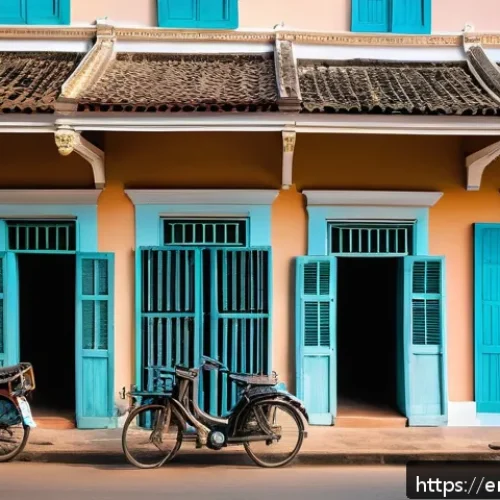
Hey fellow adventurers! Ready to immerse yourselves in the enchanting beauty of Laos, with its serene temples, lush landscapes, and incredibly friendly locals?

I know that feeling when you’re planning a trip, buzzing with excitement, but then a little voice creeps in: “How do I handle my money there?” Trust me, I’ve been there, staring at confusing exchange rates and wondering if I’m getting a fair deal.
Currency exchange in a foreign land, especially somewhere as unique as Laos, can feel like navigating a maze, and let’s be honest, nobody wants to start their dream vacation feeling stressed about finances.
I remember my first trip, trying to figure out the best spot to change my dollars into Lao Kip, and let me tell you, a good tip would have saved me so much hassle and probably a few extra precious dollars!
It’s all about knowing the ropes before you go. Forget about those outdated guides; the world, and especially the travel landscape in Southeast Asia, is constantly evolving.
From the best places to find favorable rates to avoiding hidden fees and understanding the local payment culture, having the most up-to-date information can truly transform your experience from good to absolutely unforgettable.
So, if you’re keen to maximize every Kip and enjoy a seamless financial journey through this incredible country, you’ve definitely come to the right place.
Let’s make sure your travel money works just as hard as you do to get there. We’ll get into the exact details in the article below.
Getting Your Kip: The Best Spots to Swap Your Cash
Banks vs. Independent Exchange Counters: Where to Find Your Best Rate
Okay, so you’ve just landed in Vientiane or Luang Prabang, and that initial buzz of adventure is quickly followed by the practical question: “Where do I get some local currency?” Trust me, this is where a little bit of insider knowledge goes a long way.
My first instinct when I travel is always to hit up a bank, thinking they’ll be the most reliable, and generally, they are. Major banks like BCEL (Banque Pour Le Commerce Exterieur Lao) or Lao-Viet Bank have branches in bigger cities and offer fairly competitive rates.
The process can sometimes be a tad slow, with a bit of paperwork, but you’re usually guaranteed a legitimate exchange. However, here’s where my experience kicks in: don’t overlook the independent exchange counters, especially in tourist-heavy areas.
I’ve often found that these smaller, often family-run, places can offer slightly better rates than the big banks, particularly for smaller sums. Just be sure to compare a few places before committing.
A quick walk around the block in a central area will usually give you a good idea of the prevailing rates. Always, *always* count your money before you leave the counter, right there in front of the exchanger.
It might feel a bit awkward, but it’s just good practice and saves a lot of potential headaches later. I learned this the hard way once, rushing off too quickly and realizing later I was short a few thousand Kip – a minor amount, but a lesson learned nonetheless!
It really taught me to slow down and verify every transaction, no matter how small, when dealing with foreign currency.
Airport Exchange: A Necessary Evil or a Decent Deal?
Let’s talk about the airport. You just stepped off a long flight, you’re tired, and you just want to get to your guesthouse. It’s super tempting to just exchange a big chunk of cash right there at Wattay International Airport (Vientiane) or Luang Prabang International Airport.
My advice? Exchange *just enough* to cover your immediate needs – think a taxi ride, maybe a quick bite, and a bottle of water. Airport exchange rates, almost universally, are not your friend.
They know you’re a captive audience, and they usually offer rates that are noticeably worse than what you’d find even a few kilometers away in the city center.
I remember my very first time in Laos, swapping a significant amount at the airport, only to walk past a bank a few hours later and see a much more favorable rate advertised.
The slight inconvenience of waiting until you get into town to do the bulk of your exchange is almost always worth the extra Kip you’ll save. Think of it as an investment in your pad thai fund!
That initial small sum will get you comfortably to your accommodation, and then you can seek out better rates with a clear head.
Navigating the Numbers: Understanding Exchange Rates and Avoiding Rip-offs
Spotting the Best Rates: A Traveler’s Keen Eye
Understanding exchange rates can feel like deciphering a secret code sometimes, especially when you’re dealing with a currency like the Lao Kip, which has a lot of zeroes!
It’s easy to get overwhelmed. The official currency is the Lao Kip (LAK), and at the time I’m writing this, you’re looking at thousands of Kip for just one US dollar.
This means that a small difference in the exchange rate can actually amount to a significant sum when you’re changing larger amounts. My personal go-to strategy is to check the current interbank rate on a reliable online currency converter app *before* I even leave my hotel.
Apps like XE Currency or Google’s own converter are fantastic for giving you a real-time benchmark. With this number in mind, you can walk into any exchange office with confidence, knowing if the rate they’re offering is fair or if they’re trying to pull a fast one.
Don’t be shy about walking away if a rate seems way off; there’s always another exchange place around the corner in most urban areas. Remember, every Kip saved is a Kip you can spend on a delicious fresh fruit shake!
It’s all about empowering yourself with information.
Hidden Fees and Commission Traps: What to Watch Out For
Ah, the dreaded hidden fees! They’re like those tiny, annoying mosquitoes in the evening – you don’t notice them until they’ve already taken a bite. Most reputable exchange places in Laos will display their rates clearly, and ideally, they won’t charge a commission.
However, some smaller, less transparent operations might try to sneak in a “service charge” or a “commission fee.” Always ask, “Is this the final rate, with no extra charges?” before handing over your money.
If they seem hesitant or give you a vague answer, that’s a red flag waving vigorously in the wind. I once encountered a place that had a seemingly fantastic rate, only to realize *after* the transaction that they’d taken a 5% commission.
It felt like such a gut punch, and honestly, it just leaves a sour taste in your mouth, making you feel a bit foolish. My advice? Stick to places that advertise “no commission” or where the rates are very clearly laid out on a digital board.
Transparency is key here, my friends, and it speaks volumes about the trustworthiness of the establishment.
Plastic vs. Paper: When to Use Cards and When Cash is King
Credit and Debit Cards: Convenience with a Catch
In our increasingly cashless world, it’s natural to wonder how much you can rely on your plastic in Laos. Here’s the lowdown, based on my own adventures: major credit and debit cards (Visa and Mastercard mostly) are accepted in larger hotels, upscale restaurants, and some bigger shops, particularly in Vientiane and Luang Prabang.
For the most part, though, Laos is still very much a cash-based society. I’ve found myself in many situations where my card was useless – from buying street food to paying for guesthouse stays in smaller towns, or even just snagging a delicious coffee at a local cafe.
While the convenience of swiping a card is undeniable, keep in mind the potential for foreign transaction fees from your bank. These can quietly add up, turning those small purchases into slightly more expensive ones.
Always check with your bank before you travel about their international fees. I learned to balance this by using my card for bigger expenses like hotel bookings made online in advance, but always carrying enough cash for daily spending.
It’s about striking that perfect balance to avoid unnecessary charges and stress.
The Reign of Cash: Why Kip is Your Best Friend
Let me tell you, cash is king in Laos. From the bustling morning markets to the serene wats where you might want to leave a small donation, and especially when you’re exploring off the beaten path, local currency (Lao Kip) is absolutely essential.
Many smaller businesses, guesthouses, local eateries, and tour operators simply don’t have card machines, or if they do, they prefer cash to avoid processing fees.
I remember trying to pay for a delightful cooking class in Luang Prabang with my card, only to be met with a friendly but firm “Cash only, please!” Luckily, I had enough Kip on me.
It’s not just about acceptance; sometimes, you might even get a slightly better deal paying in cash, as vendors don’t have to factor in card processing costs.
Always carry a mix of denominations – large notes for bigger purchases and plenty of smaller notes (10,000 LAK, 20,000 LAK) for street food, tuk-tuks, and market bargaining.
There’s nothing worse than trying to pay for a 5,000 Kip noodle soup with a 100,000 Kip note and having the vendor struggle for change! It’s an instant confidence booster to know you can pay for anything, anywhere.
ATMs in Laos: Your Lifeline (and Sometimes Your Headache!)
Locating ATMs and Daily Withdrawal Limits
ATMs are readily available in major cities like Vientiane, Luang Prabang, and Pakse, as well as in some larger towns. You’ll often find them outside bank branches, at shopping centers, and sometimes even at gas stations.
The key is knowing where to look and understanding the local nuances. When I first visited, I assumed ATMs would be everywhere, just like back home. Not quite!
While prevalent in urban centers, venture into smaller villages, and you’ll find them to be non-existent. Always plan ahead if you’re heading to more remote areas.
One thing to be very aware of is the daily withdrawal limit, which can be significantly lower than what you might be used to. Typically, it ranges from 1,000,000 LAK to 2,500,000 LAK (roughly $50-$125 USD, depending on the exchange rate) per transaction.
This means you might need to make multiple withdrawals if you need a larger sum, and yes, those transaction fees can add up. My bank back home sometimes charged me a flat fee *per withdrawal*, so making several small ones was costing me a small fortune, which was a tough pill to swallow.
Navigating ATM Fees and Security Tips
Speaking of fees, ATMs in Laos almost always charge a local service fee on top of any fees your home bank might impose. This can range from 20,000 LAK to 30,000 LAK per transaction.
It might not seem like much for one withdrawal, but if you’re hitting the ATM daily due to low limits, it quickly becomes a noticeable expense. My pro tip?
When you know you’ll be in a city with ATMs for a few days, plan your cash needs and try to make fewer, larger withdrawals (within the limit, of course) to minimize those pesky local fees.
In terms of security, always be vigilant. Use ATMs in well-lit, public areas, preferably inside or directly outside a bank branch. Check the card reader for any suspicious devices, cover the keypad when entering your PIN, and be aware of your surroundings.
I always give the card reader a little wiggle to make sure nothing is loose. I’ve heard stories, though thankfully never experienced one myself, of card skimmers being used, so a little paranoia goes a long way in protecting your finances.
Better safe than sorry when it comes to your hard-earned travel cash!
The Kip, The Baht, and The Dollar: A Trio of Currencies

When to Use Thai Baht and US Dollars
This is where things get a little interesting and can sometimes save you a trip to the ATM or an exchange counter. While the Lao Kip is the official currency, you’ll find that Thai Baht (THB) and US Dollars (USD) are widely accepted, especially in tourist areas, for larger purchases, and along the Thai border.
For instance, many guesthouses, tour operators, and even some fancier restaurants in Vientiane and Luang Prabang will happily quote prices in USD or THB, or accept them as payment.
I’ve often used Thai Baht when traveling from Thailand into Laos, finding it convenient for initial expenses without needing to immediately exchange to Kip.
Similarly, for bigger ticket items like hotel rooms or certain long-distance bus tickets, US Dollars are frequently accepted. It feels a bit like having a multi-currency wallet in your back pocket, offering flexibility.
However, a word of caution: while accepted, the exchange rate you get from a vendor when paying in Baht or Dollars might not always be the most favorable.
They often round up or use a slightly less competitive rate to their advantage, so it’s always worth checking if paying in Kip would be cheaper. Knowing these nuances can make a real difference to your budget.
The Art of Paying in Multiple Currencies
Navigating which currency to use for what transaction can feel like a strategic game. My personal approach is to use Kip for almost all daily expenses – street food, local markets, tuk-tuks, smaller guesthouses, and everyday groceries.
This ensures you’re getting the local price and supporting local businesses directly in their preferred currency. I reserve Thai Baht for situations where I’m near the Thai border or if a price is explicitly quoted in Baht and seems fair.
US Dollars are primarily for pre-booked accommodations, higher-end tours, or international flight tickets where they are specifically requested or offer a clear advantage.
I remember once paying for a rather expensive souvenir in USD because the vendor offered a slight discount for it, which was a nice bonus! The key here is flexibility and knowing your options.
Always carry a mix of Kip for daily life, and a smaller stash of USD or THB for larger, specific purchases where it might be more convenient or even beneficial.
It’s all about being prepared for any payment scenario Laos throws your way. To help clarify, here’s a quick overview of when each currency shines:
| Currency Type | Best Use Case | Notes for Travelers |
|---|---|---|
| Lao Kip (LAK) | Daily expenses: food stalls, local markets, tuk-tuks, small guesthouses, local activities. | Essential. Always carry small denominations. Best rates often found in city exchange offices. |
| Thai Baht (THB) | Near Thai border, some larger tourist establishments, tour bookings. | Accepted widely in some areas, but rates from vendors may not be optimal. Good for transitions. |
| US Dollar (USD) | Major hotels, upscale tours, international flights, some larger souvenir shops. | Good for high-value items. Always check the vendor’s exchange rate; sometimes better to convert to Kip. |
| Credit/Debit Cards | Large hotels, some international restaurants, major supermarkets (in big cities). | Convenient but limited acceptance. Watch out for foreign transaction fees and ATM withdrawal limits. |
Budgeting Like a Boss: Making Your Money Stretch Further
Setting a Daily Budget and Sticking to It
Let’s be real, one of the biggest worries when traveling is blowing your budget too quickly. In Laos, your money can stretch incredibly far if you’re smart about it, but it’s equally easy to overspend if you’re not paying attention to those zeroes on the Kip notes!
My golden rule for any trip, especially to Southeast Asia, is to set a realistic daily budget and then track my spending. I use a simple budgeting app on my phone, or sometimes just a small notebook, to jot down every expense.
It sounds tedious, but honestly, it’s a game-changer. For a mid-range traveler, you might aim for something like $30-50 USD a day, covering accommodation, food, activities, and transport.
Of course, this varies wildly depending on your style – luxury travelers will spend more, backpackers often less. The crucial part is knowing your limit and making conscious choices.
I’ve found that having a budget in mind helps me resist impulse buys and makes me more mindful of where my money is actually going. It’s not about being stingy, but about being savvy!
Every little bit saved adds up to more experiences.
Smart Spending: Food, Transport, and Souvenirs
Where does your money really go in Laos? Mostly on food, transport, and perhaps a few delightful souvenirs. Eating locally is hands down the best way to save money and experience authentic Laotian cuisine.
Street food stalls and local markets offer incredibly delicious meals for a fraction of the cost of tourist restaurants. I’m talking about bowls of khao piak sen (noodle soup) for less than a dollar, or a plate of sticky rice with grilled chicken for a couple of dollars.
For transport, tuk-tuks are ubiquitous, but always agree on a price *before* you get in. Bargaining is expected and part of the fun! For longer distances, local buses are significantly cheaper than private minivans, though they might take a bit longer.
As for souvenirs, the markets are brimming with beautiful handicrafts. Again, don’t be afraid to haggle a little, but always do it respectfully and with a smile.
Remember, a few thousand Kip saved on a meal or a ride can quickly add up, leaving you with more to spend on that unforgettable excursion or a special keepsake to remember your trip by.
It’s all part of the authentic travel experience.
Digital Wallets and Future Trends: What’s Next for Payments in Laos?
Emerging Digital Payment Options
While Laos is still heavily reliant on cash, especially outside of its major urban centers, the digital wave is slowly but surely making its way through.
I’ve started noticing more and more places, particularly modern cafes, larger supermarkets, and even some forward-thinking guesthouses, accepting QR code payments or offering mobile wallet options.
BCEL’s “OnePay” is one local example, and regional apps like WeChat Pay and AliPay are becoming increasingly common, catering to the growing number of Chinese tourists.
For international visitors, the landscape is a bit different. While your Apple Pay or Google Pay might be linked to your credit card, their acceptance is still quite limited compared to their widespread use in Western countries.
It’s definitely a space to watch, and I wouldn’t be surprised if in a few years, tapping your phone becomes as common as pulling out a Kip note. For now, however, it’s more of a convenient bonus if you stumble upon it, rather than a reliable payment method to depend on for all your transactions.
Keeping Up with Evolving Payment Methods Abroad
The world of travel finance is always shifting, and what’s true today might be slightly different tomorrow. My approach to staying ahead of the curve is simple: do a quick online search for “payment methods Laos” or “digital wallets Laos” a week or two before my trip.
Travel forums and recent blog posts are often goldmines for the most up-to-date information. Local payment apps can sometimes be linked to international cards, or there might be new partnerships forming that could benefit travelers.
I also pay attention to what other travelers are saying on the ground. A quick chat with a fellow backpacker or a guesthouse owner can often reveal the latest trends or a newly adopted payment system.
The key is to remain flexible and open to new ways of managing your money. While cash is still king, having an awareness of emerging digital options can only enhance your travel experience and potentially even save you a bit of hassle down the road.
Who knows, maybe my next trip will be entirely cashless in Laos, allowing me to fully embrace the technological advancements!
Closing Thoughts
And there you have it, fellow adventurers! Navigating the financial landscape in Laos might seem like a mini-adventure in itself, but with these tips, you’re more than ready to conquer it. It’s all about being prepared, staying aware, and embracing the unique charm of how things work in this incredible country. Trust me, once you get the hang of it, you’ll feel like a seasoned pro, leaving you free to truly immerse yourself in the stunning landscapes and warm hospitality. Go forth and explore, knowing your money matters are handled!
Useful Information to Know
1. Always compare exchange rates from banks and independent counters in the city; airport rates are usually the least favorable.
2. Cash (Lao Kip) is king for most daily expenses, especially at local markets, street food stalls, and smaller guesthouses. Make sure to carry smaller denominations.
3. Be aware of ATM withdrawal limits (often 1,000,000 – 2,500,000 LAK) and local transaction fees; plan your withdrawals to minimize costs.
4. While Thai Baht and US Dollars are accepted in tourist areas and for larger purchases, calculate if paying in Kip offers a better exchange rate from the vendor.
5. Protect your finances by using ATMs in secure, well-lit locations, checking for skimmers, and covering your PIN when making withdrawals.
Key Takeaways
Ultimately, mastering your money in Laos is about being savvy and flexible. By understanding when to use Kip, when to consider Baht or USD, and how to navigate exchanges and ATMs, you’ll empower yourself for a smoother, more enjoyable trip. Don’t let financial worries overshadow the magic of Laos; instead, approach it with confidence and an adventurous spirit, knowing you’re well-prepared for whatever comes your way. Your incredible journey awaits!
Frequently Asked Questions (FAQ) 📖
Q: Where’s the best place to exchange my money for Lao Kip, and what should I keep in mind to get a fair rate?
A: Oh, this is such a common question, and one I definitely grappled with on my first trip! You want to maximize every dollar, right? From my experience, and what I’ve seen work best for countless travelers, your safest and usually most favorable bet for exchanging foreign currency into Lao Kip is at the banks or official licensed money exchange counters.
Places like BCEL, Joint Development Bank, or Banque Franco-Lao branches, especially in bigger cities like Vientiane or Luang Prabang, generally offer competitive rates and, crucially, give you proper receipts.
That little piece of paper can save you a lot of headache later, trust me. I remember once getting a slightly better rate from a small exchange booth, only to realize I was short-changed when I double-checked later.
Lesson learned! Now, you might see exchange counters at the airport. They’re super convenient right after you land, but their rates are almost always a little stingier.
My personal strategy? Exchange just enough there for your initial taxi and a meal, then head into the city for better rates. Hotels also offer exchange services, which is handy in a pinch, but again, the rates usually aren’t ideal.
And a pro tip: sometimes, independent gold and jewelry shops, especially in bustling city centers, can surprise you with incredibly competitive rates – even better than the banks sometimes!
Just make sure they look reputable and always count your money right there on the spot. What you absolutely want to steer clear of are unofficial street vendors or night market stalls.
It might seem tempting if they offer a slightly higher rate, but the risk of counterfeit money or getting scammed just isn’t worth the stress on your dream vacation.
Oh, and bringing USD or Thai Baht can be incredibly useful, as they’re widely accepted and easily exchanged, sometimes even directly for larger purchases.
Q: Should I rely on cash or credit/debit cards when traveling around Laos?
A: This is a golden question, and if there’s one thing I’ve learned from my travels through Laos, it’s this: cash is king! Laos is, charmingly, still very much a cash-based society, especially once you venture beyond the main tourist hubs of Vientiane and Luang Prabang.
I’ve found myself in so many situations where having a wad of crisp Lao Kip was the only way to pay for that delicious street food, a local tuk-tuk ride, or those delightful souvenirs at a village market.
Most small businesses, guesthouses, and local eateries simply don’t have card facilities. Now, don’t get me wrong, cards aren’t entirely useless. You’ll find that high-end hotels, swankier restaurants, and larger tour operators in the major cities will accept Visa or Mastercard.
But even then, I’ve often encountered a 2-3% surcharge for using a card, which, over time, really adds up. There’s also an exciting trend of QR code payments popping up, even with some smaller vendors, which is cool to see.
But until it’s universally adopted, my advice is to always have plenty of Lao Kip on hand. And here’s a tip from my own experience: always carry a good mix of small denominations.
Those 50,000 or 100,000 Kip notes can be hard to break in smaller villages, and you don’t want to be that traveler holding up the line while someone scrambles for change!
Carrying a bit of USD or Thai Baht as a backup, especially for emergencies or larger, internationally-oriented transactions, is also a smart move.
Q: What’s the deal with
A: TMs in Laos? Are they widely available, and should I expect hefty fees? A3: Ah, the ATM situation in Laos!
This is where a little pre-planning really pays off, believe me. You’ll find ATMs quite readily available in the big cities like Vientiane, Luang Prabang, and Pakse, as well as popular tourist spots like Vang Vieng.
So, no need to panic about being completely cut off from your funds there. However, the moment you step into more remote or rural areas, ATM availability can become quite scarce or even non-existent.
It’s definitely not like strolling down a busy street back home where there’s an ATM on every corner. Now, about those fees – yes, almost every ATM in Laos will charge you a local withdrawal fee.
I’ve seen it typically range around 30,000 Lao Kip per transaction, though some banks, like JDB, might have slightly different structures or even a percentage-based fee.
This is crucial because this local fee is on top of any international transaction fees your home bank might charge you. So, those small withdrawals can really sting!
What makes it a bit tricky is that most ATMs also have a fairly low maximum withdrawal limit, often between 1 to 3 million Kip at a time. This means if you need a larger sum, you might have to make multiple withdrawals, racking up those fees each time.
My top piece of advice here is to consolidate your withdrawals as much as possible, within the ATM’s limit, to minimize the number of fees you incur. Also, always, and I mean always, decline any offer from the ATM to convert your currency for you (it usually asks “Accept” or “Decline Conversion”).
Let your own bank or card network (Visa/Mastercard) handle the conversion; you’ll almost always get a much better exchange rate. Lastly, from my own nerve-wracking moments, I’d suggest using ATMs that are attached to actual bank branches and try to do it during banking hours.
Lao ATMs can sometimes be a bit temperamental – running out of cash, or in rare cases, even deciding to keep your card! Having a backup card (or two!) and some emergency cash tucked away is a travel hack that has saved me more than once.